For bilingual families
Bilingual stories to read with your children
Your home language on one side, the language of school on the other, paragraph by paragraph. Free short stories to read together, so the home language keeps growing alongside the one your children hear all day.
Why the home language needs stories
Parents raising children in two languages say the same thing again and again: once school starts, the school language takes over. Within two or three years many children understand the home language but no longer answer in it, and the words they know stop at the kitchen table.
Stories are the cheapest way to push back. They carry the words daily life never needs, from dragons to feelings, and they give you and your child something to talk about in the home language. The trouble is finding them: books in the heritage language are scarce in most bookshops, and the ones there are rarely sit at the right level.
Stories in Spanish, with English beside them
Short stories written for young readers, and the fables and fairy tales children already know, each in Spanish with the English next to it. Open one, read the Spanish aloud, and let your child glance across when a word is new.
- A1
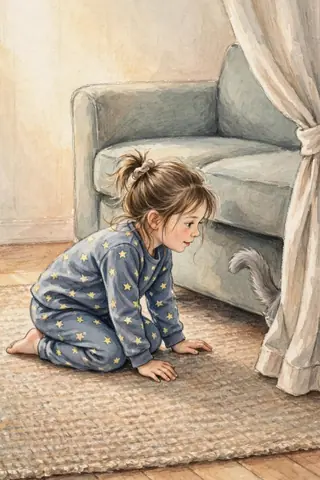
¿Dónde está Mimi?
Primeros cuentos · Historia 1 · Spanish · 5 min
DuoText original - A1
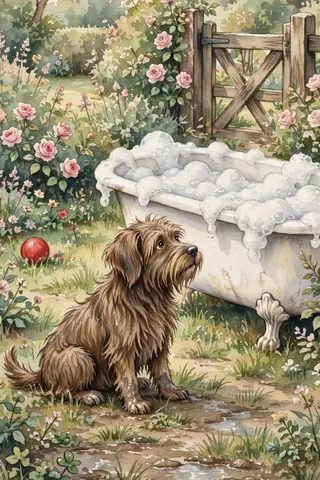
Bruno y el baño
Primeros cuentos · Historia 2 · Spanish · 5 min
DuoText original - A1
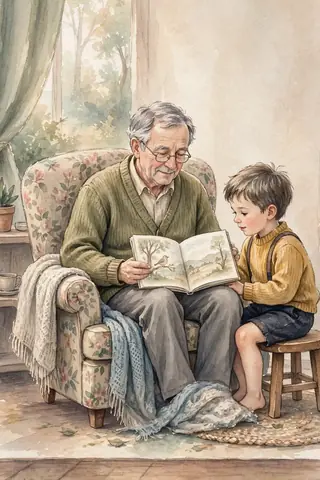
El abuelo y las gafas
Primeros cuentos · Historia 3 · Spanish · 5 min
DuoText original - A1
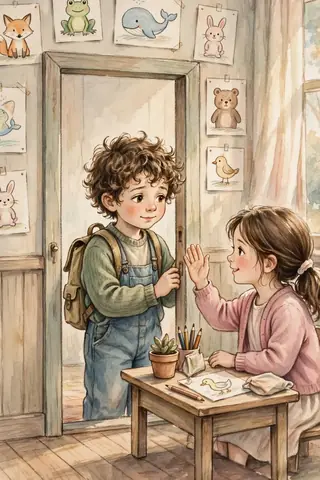
El chico nuevo
Primeros cuentos · Historia 9 · Spanish · 5 min
DuoText original - B1
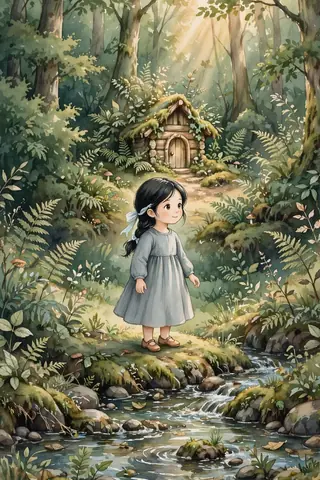
Blancanieves
Brothers Grimm · Spanish · 20 min
- B1
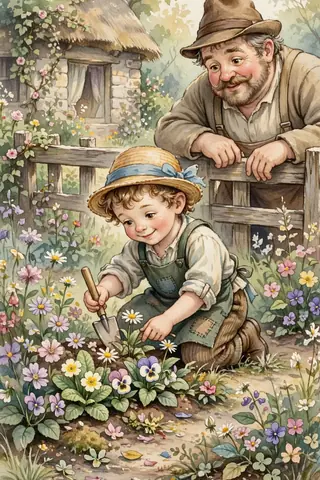
El amigo fiel
Oscar Wilde · Spanish · 35 min
- B1
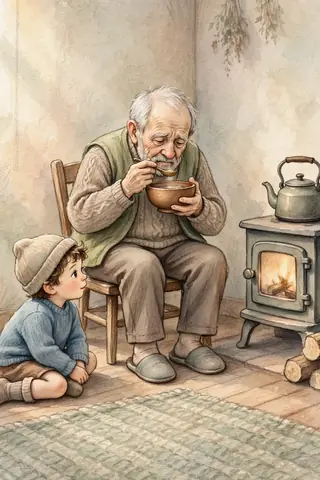
El anciano y su nieto
Brothers Grimm · Spanish · 5 min
- B1
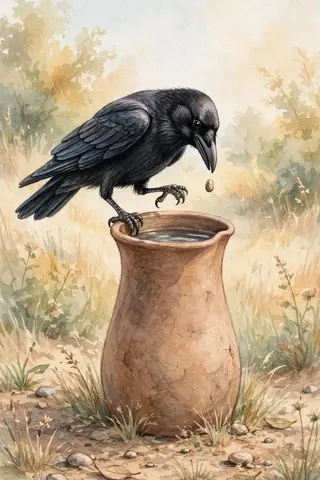
El cuervo y la jarra
Aesop · Spanish · 5 min
The other way round: English, with Spanish beside it
When the home language is the strong one and English is the new language, turn the book around. Every story in the library can be read in any two of its languages; choose the pair on the story’s page.
How to read a bilingual story together
Read the home language, show the other
Read aloud in the home language. The school language on the other side is there for your child’s eyes, so a word they cannot place is matched without you stopping to translate.
Swap sides
An older child can read the school language aloud to you while you follow in the home language, then the other way round. Children love being the expert for a page.
Talk about it, in the home language
A question about the story (“what would you have done?”) is worth more than another page. The story gives the conversation something to hold on to.
Little and often
Ten minutes at bedtime beats an hour on Sunday. The library’s first stories are short enough to finish in one sitting.
What to read at each age
- Before reading on their own. Read the home-language side aloud. Short stories with one child, one animal and one problem work best.
- Early readers. The simplest stories in the library, marked A1: short sentences, everyday words, a picture on the cover to talk about first.
- Confident readers. Fables and fairy tales, then longer stories. Let them read the side they find harder and use the other as a safety net.
- Teenagers. Classic short stories by O. Henry, Maupassant or Poe, in the language they are losing, with the stronger one beside it.
Your family's own books, in two languages
The book your child loves may not exist in the home language at all. If you have it as an EPUB or a text-based PDF, DuoText can pair every paragraph with a translation in any of 68 languages, to read in the browser, on a Kindle or Kobo, or printed. There is a free preview, and 50 free pages when you sign up.
Questions from parents
Will reading in two languages confuse my child?
No. Children growing up with two languages sort them out on their own, and mixing words for a while is a normal stage, not a problem. Seeing the same story in both languages gives them a bridge between the two rather than a muddle.
My child understands the home language but answers in the school language. Does reading help?
It is one of the best things you can do. Stories bring words that everyday talk at home never reaches, and a story read together gives the child something to talk about in the home language. Keep it pleasant rather than a lesson.
Which languages can we read in?
The free library has stories in English, Spanish, French, German, Italian and several more languages, each with another language beside it. For a book you own, you can choose from all the languages DuoText translates into.
Are the library stories free?
Yes. They can be read in the browser without an account, and downloaded for an e-reader or for printing.