Andrew Lang
Ali Baba and the Forty Thieves
Ali Baba und die vierzig Räuber
Ein armer Holzfäller versteckt sich in einem Baum und hört, wie vierzig Räuber ihre geheime Höhle mit den Worten „Sesam, öffne dich!“ öffnen. Er nimmt etwas von ihrem Gold mit, und bald macht sich der Hauptmann der Räuber auf die Suche nach dem Mann, der ihr Geheimnis kennt.
B225 minเสียง
เรื่องเริ่มต้นอย่างไร
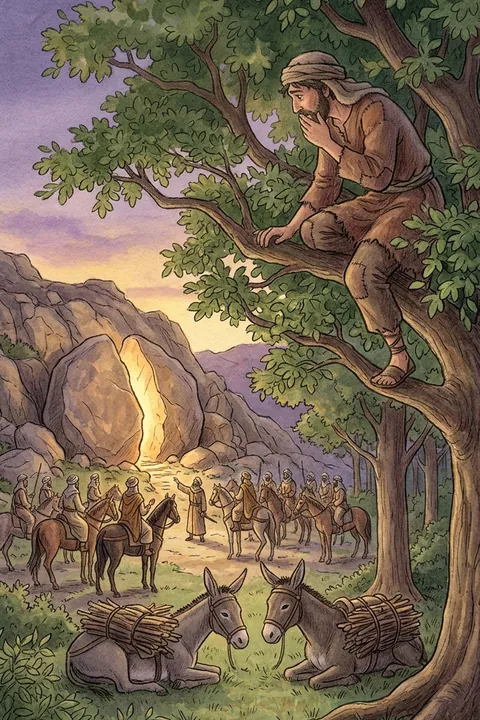
In a town in Persia there lived two brothers, one named Cassim, the other Ali Baba. Cassim was married to a rich wife and lived in comfort, while Ali Baba had to support his wife and children by cutting wood in a nearby forest and selling it in town. One day, when Ali Baba was in the forest, he saw a group of men on horseback coming toward him in a cloud of dust. He was afraid they were robbers, and he climbed into a tree to hide. When the men came up and got off their horses, he counted forty of them. They took the bridles off their horses and tied them to trees. The finest-looking man among them, whom Ali Baba took to be their captain, went a little way into some bushes and said, "Open, Sesame!" so clearly that Ali Baba heard him. A door opened in the rocks, and after the captain had made the group go in, he followed them, and the door shut again by itself. They stayed inside for some time, and Ali Baba, afraid they might come out and catch him, had to sit patiently in the tree. At last the door opened again, and the Forty Thieves came out. The captain had gone in last, so he came out first and made them all pass by him. Then he closed the door, saying, "Shut, Sesame!" Every man put the bridle on his horse and mounted, the captain rode at their head, and they went back the way they had come.
In einer Stadt in Persien lebten zwei Brüder; der eine hieß Cassim, der andere Ali Baba. Cassim war mit einer reichen Frau verheiratet und lebte im Wohlstand, während Ali Baba seine Frau und seine Kinder ernähren musste, indem er in einem nahen Wald Holz schlug und es in der Stadt verkaufte. Eines Tages, als Ali Baba im Wald war, sah er eine Gruppe von Reitern in einer Staubwolke auf sich zukommen. Er hatte Angst, dass es Räuber waren, und kletterte auf einen Baum, um sich zu verstecken. Als die Männer herankamen und von ihren Pferden stiegen, zählte er vierzig von ihnen. Sie nahmen ihren Pferden die Zäume ab und banden sie an Bäume. Der stattlichste Mann unter ihnen, den Ali Baba für ihren Hauptmann hielt, ging ein Stück in ein Gebüsch und sagte so deutlich: „Sesam, öffne dich!“, dass Ali Baba es hörte. Eine Tür öffnete sich in den Felsen, und nachdem der Hauptmann die Gruppe hineingehen lassen hatte, folgte er ihnen, und die Tür schloss sich wieder von selbst. Sie blieben einige Zeit darin, und Ali Baba, der fürchtete, sie könnten herauskommen und ihn erwischen, musste geduldig im Baum sitzen bleiben. Endlich öffnete sich die Tür wieder, und die vierzig Räuber kamen heraus. Der Hauptmann war als Letzter hineingegangen, also kam er als Erster heraus und ließ sie alle an sich vorbeigehen. Dann schloss er die Tür mit den Worten: „Sesam, schließe dich!“ Jeder Mann legte seinem Pferd das Zaumzeug an und stieg auf, der Hauptmann ritt an ihrer Spitze, und sie ritten denselben Weg zurück, den sie gekommen waren.
Then Ali Baba climbed down and went to the door hidden among the bushes and said, "Open, Sesame!" and it flew open. Ali Baba expected a dull, dismal place, so he was greatly surprised to find a large, well-lit room. It had been hollowed out by human hands into the shape of a vault, and it got its light from an opening in the ceiling. He saw rich bales of goods, such as silk and fine brocades, all piled together, gold and silver in heaps, and money in leather purses. He went in, and the door shut behind him. He didn't look at the silver. He carried out as many bags of gold as he thought his donkeys, which were grazing outside, could carry, loaded them with the bags, and hid it all under bundles of sticks. Saying the words "Shut, Sesame!" he closed the door and went home.
Dann kletterte Ali Baba herab, ging zu der im Gebüsch verborgenen Tür und sagte: „Sesam, öffne dich!“, und sie flog auf. Ali Baba hatte einen finsteren, trostlosen Ort erwartet, daher war er sehr überrascht, einen großen, hellen Raum zu finden. Er war von Menschenhand in Form eines Gewölbes ausgehöhlt worden und erhielt sein Licht durch eine Öffnung in der Decke. Er sah reiche Warenballen, wie Seide und feinen Brokat, die alle aufeinandergestapelt lagen, Gold und Silber auf Haufen und Geld in ledernen Beuteln. Er ging hinein, und die Tür schloss sich hinter ihm. Das Silber beachtete er nicht. Er trug so viele Säcke mit Gold hinaus, wie seine Esel, die draußen grasten, seiner Meinung nach tragen konnten, belud sie mit den Säcken und versteckte alles unter Reisigbündeln. Mit den Worten „Sesam, schließe dich!“ schloss er die Tür und ging nach Hause.
Then he drove his donkeys into the yard, shut the gates, carried the money bags to his wife, and emptied them out in front of her. He told her to keep the secret, and he said he would go and bury the gold. "Let me measure it first," said his wife. "I'll go and borrow a measure from someone while you dig the hole." So she ran to Cassim's wife and borrowed a measure. Cassim's wife knew Ali Baba was poor, so she was curious to find out what kind of grain his wife wanted to measure, and she cleverly put some fat at the bottom of the measure. Ali Baba's wife went home and set the measure on the pile of gold. She filled it and emptied it many times, to her great satisfaction. Then she carried it back to her sister-in-law, without noticing that a piece of gold was stuck to it. Cassim's wife saw it as soon as her back was turned. She grew very curious, and when Cassim came home she said to him, "Cassim, your brother is richer than you. He doesn't count his money, he measures it." He begged her to explain this riddle, and she did, by showing him the piece of gold and telling him where she had found it. Then Cassim became so envious that he couldn't sleep, and in the morning, before sunrise, he went to his brother. "Ali Baba," he said, showing him the gold piece, "you pretend to be poor, and yet you measure gold." From this, Ali Baba understood that, because of his wife's foolishness, Cassim and his wife knew their secret. So he confessed everything and offered Cassim a share. "I expect that," said Cassim, "but I must know where to find the treasure. Otherwise I will tell everyone, and you will lose everything." Ali Baba, more out of kindness than fear, told him about the cave and the exact words to use. Cassim left Ali Baba, planning to get there before him and take the treasure for himself. He got up early the next morning and set out with ten mules loaded with big chests. He soon found the place and the door in the rock. He said, "Open, Sesame!" and the door opened and shut behind him. He could have feasted his eyes on the treasures all day, but now he hurried to gather as much of it as he could. But when he was ready to go, he couldn't remember what to say, because he was thinking about his great riches. Instead of "Sesame," he said, "Open, Barley!" and the door stayed shut. He named several different kinds of grain, all except the right one, and the door still stayed shut. He was so frightened of the danger he was in that he had forgotten the word as completely as if he had never heard it.
Dann trieb er seine Esel in den Hof, schloss die Tore, brachte die Geldbeutel zu seiner Frau und schüttete sie vor ihr aus. Er trug ihr auf, das Geheimnis zu wahren, und sagte, er wolle das Gold vergraben. „Lass es mich zuerst messen“, sagte seine Frau. „Ich leihe mir von jemandem ein Hohlmaß, während du das Loch gräbst.“ So lief sie zu Cassims Frau und lieh sich ein Maß. Cassims Frau wusste, dass Ali Baba arm war, daher war sie neugierig, was für Getreide seine Frau wohl messen wollte, und strich geschickt etwas Fett auf den Boden des Maßes. Ali Babas Frau ging nach Hause und setzte das Maß auf den Goldhaufen. Zu ihrer großen Freude füllte und leerte sie es viele Male. Dann brachte sie es zu ihrer Schwägerin zurück, ohne zu bemerken, dass ein Goldstück daran kleben geblieben war. Cassims Frau sah es, sobald sie ihr den Rücken zukehrte. Sie wurde sehr neugierig, und als Cassim nach Hause kam, sagte sie zu ihm: „Cassim, dein Bruder ist reicher als du. Er zählt sein Geld nicht, er misst es.“ Er bat sie, ihm dieses Rätsel zu erklären, und sie tat es, indem sie ihm das Goldstück zeigte und ihm erzählte, wo sie es gefunden hatte. Da wurde Cassim so neidisch, dass er nicht schlafen konnte, und am Morgen, noch vor Sonnenaufgang, ging er zu seinem Bruder. „Ali Baba“, sagte er und zeigte ihm das Goldstück, „du tust so, als wärst du arm, und doch misst du Gold.“ Daran erkannte Ali Baba, dass Cassim und seine Frau durch die Unklugheit seiner eigenen Frau ihr Geheimnis kannten. So gestand er alles und bot Cassim einen Anteil an. „Das erwarte ich auch“, sagte Cassim, „aber ich muss wissen, wo der Schatz zu finden ist. Sonst erzähle ich es allen, und du wirst alles verlieren.“ Ali Baba, eher aus Güte als aus Furcht, erzählte ihm von der Höhle und den genauen Worten, die man gebrauchen musste. Cassim verließ Ali Baba mit dem Plan, vor ihm dort zu sein und den Schatz für sich zu nehmen. Er stand am nächsten Morgen früh auf und zog mit zehn Maultieren los, die mit großen Kisten beladen waren. Bald fand er die Stelle und die Tür im Felsen. Er sagte: „Sesam, öffne dich!“, und die Tür öffnete sich und schloss sich hinter ihm. Er hätte seine Augen den ganzen Tag an den Schätzen weiden können, doch nun beeilte er sich, so viel davon zusammenzuraffen, wie er konnte. Als er aber bereit war zu gehen, konnte er sich nicht mehr erinnern, was er sagen sollte, weil er nur noch an seinen großen Reichtum dachte. Statt „Sesam“ sagte er: „Gerste, öffne dich!“, und die Tür blieb zu. Er nannte mehrere verschiedene Getreidearten, alle außer der richtigen, und die Tür blieb noch immer verschlossen. Er hatte solche Angst vor der Gefahr, in der er schwebte, dass er das Wort so völlig vergessen hatte, als hätte er es nie gehört.
ภาษา
- Ali Baba and the Forty Thieves · อังกฤษ (ต้นฉบับ)B2 ปานกลาง · 3,659 คำ · ~25 min · เสียง
- Ali Baba und die vierzig Räuber · เยอรมันB2 ปานกลาง · 3,696 คำ · ~25 min · เสียง
- Ο Αλί Μπαμπά και οι σαράντα κλέφτες · กรีกB2 ปานกลาง · 3,636 คำ · ~25 min
- Alí Babá y los cuarenta ladrones · สเปนB2 ปานกลาง · 3,643 คำ · ~25 min · เสียง
- Ali Baba et les Quarante Voleurs · ฝรั่งเศสB2 ปานกลาง · 4,090 คำ · ~25 min · เสียง
- अली बाबा और चालीस चोर · ฮินดีB2 ปานกลาง · 4,217 คำ · ~30 min
- Ali Baba dan Empat Puluh Penyamun · อินโดนีเซียB2 ปานกลาง · 3,330 คำ · ~20 min
- Alì Babà e i quaranta ladroni · อิตาลีB2 ปานกลาง · 3,394 คำ · ~25 min
- アリババと40人の盗賊 · ญี่ปุ่นB2 ปานกลาง
- 알리바바와 40인의 도둑 · เกาหลีB2 ปานกลาง · 2,504 คำ · ~15 min
- Ali Baba en de veertig rovers · ดัตช์B2 ปานกลาง · 3,831 คำ · ~25 min
- Ali Baba i czterdziestu rozbójników · โปแลนด์B2 ปานกลาง · 2,994 คำ · ~20 min
- Ali Babá e os Quarenta Ladrões · โปรตุเกสB2 ปานกลาง · 3,604 คำ · ~25 min
- Ali Baba și cei patruzeci de hoți · โรมาเนียB2 ปานกลาง · 3,691 คำ · ~25 min
- Ali Baba ve Kırk Haramiler · ตุรกีB2 ปานกลาง · 2,552 คำ · ~15 min
- Ali Baba và bốn mươi tên cướp · เวียดนามB2 ปานกลาง · 4,197 คำ · ~30 min
- 阿里巴巴和四十个强盗 · จีนB2 ปานกลาง
เยอรมัน คู่กับ อังกฤษ · กรีก คู่กับ อังกฤษ · อังกฤษ คู่กับ เยอรมัน · อังกฤษ คู่กับ กรีก · อังกฤษ คู่กับ สเปน · อังกฤษ คู่กับ ฝรั่งเศส · อังกฤษ คู่กับ ฮินดี · อังกฤษ คู่กับ อินโดนีเซีย · อังกฤษ คู่กับ อิตาลี · อังกฤษ คู่กับ ญี่ปุ่น · อังกฤษ คู่กับ เกาหลี · อังกฤษ คู่กับ ดัตช์ · อังกฤษ คู่กับ โปแลนด์ · อังกฤษ คู่กับ โปรตุเกส · อังกฤษ คู่กับ โรมาเนีย · อังกฤษ คู่กับ ตุรกี · อังกฤษ คู่กับ เวียดนาม · อังกฤษ คู่กับ จีน · สเปน คู่กับ อังกฤษ · ฝรั่งเศส คู่กับ อังกฤษ · ฮินดี คู่กับ อังกฤษ · อินโดนีเซีย คู่กับ อังกฤษ · อิตาลี คู่กับ อังกฤษ · ญี่ปุ่น คู่กับ อังกฤษ · เกาหลี คู่กับ อังกฤษ · ดัตช์ คู่กับ อังกฤษ · โปแลนด์ คู่กับ อังกฤษ · โปรตุเกส คู่กับ อังกฤษ · โรมาเนีย คู่กับ อังกฤษ · ตุรกี คู่กับ อังกฤษ · เวียดนาม คู่กับ อังกฤษ · จีน คู่กับ อังกฤษ · เยอรมัน คู่กับ กรีก · เยอรมัน คู่กับ สเปน · เยอรมัน คู่กับ ฝรั่งเศส · เยอรมัน คู่กับ ฮินดี · เยอรมัน คู่กับ อินโดนีเซีย · เยอรมัน คู่กับ อิตาลี · เยอรมัน คู่กับ ญี่ปุ่น · เยอรมัน คู่กับ เกาหลี · เยอรมัน คู่กับ ดัตช์ · เยอรมัน คู่กับ โปแลนด์ · เยอรมัน คู่กับ โปรตุเกส · เยอรมัน คู่กับ โรมาเนีย · เยอรมัน คู่กับ ตุรกี · เยอรมัน คู่กับ เวียดนาม · เยอรมัน คู่กับ จีน · กรีก คู่กับ เยอรมัน · กรีก คู่กับ สเปน · กรีก คู่กับ ฝรั่งเศส · กรีก คู่กับ ฮินดี · กรีก คู่กับ อินโดนีเซีย · กรีก คู่กับ อิตาลี · กรีก คู่กับ ญี่ปุ่น · กรีก คู่กับ เกาหลี · กรีก คู่กับ ดัตช์ · กรีก คู่กับ โปแลนด์ · กรีก คู่กับ โปรตุเกส · กรีก คู่กับ โรมาเนีย · กรีก คู่กับ ตุรกี · กรีก คู่กับ เวียดนาม · กรีก คู่กับ จีน · สเปน คู่กับ เยอรมัน · สเปน คู่กับ กรีก · สเปน คู่กับ ฝรั่งเศส · สเปน คู่กับ ฮินดี · สเปน คู่กับ อินโดนีเซีย · สเปน คู่กับ อิตาลี · สเปน คู่กับ ญี่ปุ่น · สเปน คู่กับ เกาหลี · สเปน คู่กับ ดัตช์ · สเปน คู่กับ โปแลนด์ · สเปน คู่กับ โปรตุเกส · สเปน คู่กับ โรมาเนีย · สเปน คู่กับ ตุรกี · สเปน คู่กับ เวียดนาม · สเปน คู่กับ จีน · ฝรั่งเศส คู่กับ เยอรมัน · ฝรั่งเศส คู่กับ กรีก · ฝรั่งเศส คู่กับ สเปน · ฝรั่งเศส คู่กับ ฮินดี · ฝรั่งเศส คู่กับ อินโดนีเซีย · ฝรั่งเศส คู่กับ อิตาลี · ฝรั่งเศส คู่กับ ญี่ปุ่น · ฝรั่งเศส คู่กับ เกาหลี · ฝรั่งเศส คู่กับ ดัตช์ · ฝรั่งเศส คู่กับ โปแลนด์ · ฝรั่งเศส คู่กับ โปรตุเกส · ฝรั่งเศส คู่กับ โรมาเนีย · ฝรั่งเศส คู่กับ ตุรกี · ฝรั่งเศส คู่กับ เวียดนาม · ฝรั่งเศส คู่กับ จีน · ฮินดี คู่กับ เยอรมัน · ฮินดี คู่กับ กรีก · ฮินดี คู่กับ สเปน · ฮินดี คู่กับ ฝรั่งเศส · ฮินดี คู่กับ อินโดนีเซีย · ฮินดี คู่กับ อิตาลี · ฮินดี คู่กับ ญี่ปุ่น · ฮินดี คู่กับ เกาหลี · ฮินดี คู่กับ ดัตช์ · ฮินดี คู่กับ โปแลนด์ · ฮินดี คู่กับ โปรตุเกส · ฮินดี คู่กับ โรมาเนีย · ฮินดี คู่กับ ตุรกี · ฮินดี คู่กับ เวียดนาม · ฮินดี คู่กับ จีน · อินโดนีเซีย คู่กับ เยอรมัน · อินโดนีเซีย คู่กับ กรีก · อินโดนีเซีย คู่กับ สเปน · อินโดนีเซีย คู่กับ ฝรั่งเศส · อินโดนีเซีย คู่กับ ฮินดี · อินโดนีเซีย คู่กับ อิตาลี · อินโดนีเซีย คู่กับ ญี่ปุ่น · อินโดนีเซีย คู่กับ เกาหลี · อินโดนีเซีย คู่กับ ดัตช์ · อินโดนีเซีย คู่กับ โปแลนด์ · อินโดนีเซีย คู่กับ โปรตุเกส · อินโดนีเซีย คู่กับ โรมาเนีย · อินโดนีเซีย คู่กับ ตุรกี · อินโดนีเซีย คู่กับ เวียดนาม · อินโดนีเซีย คู่กับ จีน · อิตาลี คู่กับ เยอรมัน · อิตาลี คู่กับ กรีก · อิตาลี คู่กับ สเปน · อิตาลี คู่กับ ฝรั่งเศส · อิตาลี คู่กับ ฮินดี · อิตาลี คู่กับ อินโดนีเซีย · อิตาลี คู่กับ ญี่ปุ่น · อิตาลี คู่กับ เกาหลี · อิตาลี คู่กับ ดัตช์ · อิตาลี คู่กับ โปแลนด์ · อิตาลี คู่กับ โปรตุเกส · อิตาลี คู่กับ โรมาเนีย · อิตาลี คู่กับ ตุรกี · อิตาลี คู่กับ เวียดนาม · อิตาลี คู่กับ จีน · ญี่ปุ่น คู่กับ เยอรมัน · ญี่ปุ่น คู่กับ กรีก · ญี่ปุ่น คู่กับ สเปน · ญี่ปุ่น คู่กับ ฝรั่งเศส · ญี่ปุ่น คู่กับ ฮินดี · ญี่ปุ่น คู่กับ อินโดนีเซีย · ญี่ปุ่น คู่กับ อิตาลี · ญี่ปุ่น คู่กับ เกาหลี · ญี่ปุ่น คู่กับ ดัตช์ · ญี่ปุ่น คู่กับ โปแลนด์ · ญี่ปุ่น คู่กับ โปรตุเกส · ญี่ปุ่น คู่กับ โรมาเนีย · ญี่ปุ่น คู่กับ ตุรกี · ญี่ปุ่น คู่กับ เวียดนาม · ญี่ปุ่น คู่กับ จีน · เกาหลี คู่กับ เยอรมัน · เกาหลี คู่กับ กรีก · เกาหลี คู่กับ สเปน · เกาหลี คู่กับ ฝรั่งเศส · เกาหลี คู่กับ ฮินดี · เกาหลี คู่กับ อินโดนีเซีย · เกาหลี คู่กับ อิตาลี · เกาหลี คู่กับ ญี่ปุ่น · เกาหลี คู่กับ ดัตช์ · เกาหลี คู่กับ โปแลนด์ · เกาหลี คู่กับ โปรตุเกส · เกาหลี คู่กับ โรมาเนีย · เกาหลี คู่กับ ตุรกี · เกาหลี คู่กับ เวียดนาม · เกาหลี คู่กับ จีน · ดัตช์ คู่กับ เยอรมัน · ดัตช์ คู่กับ กรีก · ดัตช์ คู่กับ สเปน · ดัตช์ คู่กับ ฝรั่งเศส · ดัตช์ คู่กับ ฮินดี · ดัตช์ คู่กับ อินโดนีเซีย · ดัตช์ คู่กับ อิตาลี · ดัตช์ คู่กับ ญี่ปุ่น · ดัตช์ คู่กับ เกาหลี · ดัตช์ คู่กับ โปแลนด์ · ดัตช์ คู่กับ โปรตุเกส · ดัตช์ คู่กับ โรมาเนีย · ดัตช์ คู่กับ ตุรกี · ดัตช์ คู่กับ เวียดนาม · ดัตช์ คู่กับ จีน · โปแลนด์ คู่กับ เยอรมัน · โปแลนด์ คู่กับ กรีก · โปแลนด์ คู่กับ สเปน · โปแลนด์ คู่กับ ฝรั่งเศส · โปแลนด์ คู่กับ ฮินดี · โปแลนด์ คู่กับ อินโดนีเซีย · โปแลนด์ คู่กับ อิตาลี · โปแลนด์ คู่กับ ญี่ปุ่น · โปแลนด์ คู่กับ เกาหลี · โปแลนด์ คู่กับ ดัตช์ · โปแลนด์ คู่กับ โปรตุเกส · โปแลนด์ คู่กับ โรมาเนีย · โปแลนด์ คู่กับ ตุรกี · โปแลนด์ คู่กับ เวียดนาม · โปแลนด์ คู่กับ จีน · โปรตุเกส คู่กับ เยอรมัน · โปรตุเกส คู่กับ กรีก · โปรตุเกส คู่กับ สเปน · โปรตุเกส คู่กับ ฝรั่งเศส · โปรตุเกส คู่กับ ฮินดี · โปรตุเกส คู่กับ อินโดนีเซีย · โปรตุเกส คู่กับ อิตาลี · โปรตุเกส คู่กับ ญี่ปุ่น · โปรตุเกส คู่กับ เกาหลี · โปรตุเกส คู่กับ ดัตช์ · โปรตุเกส คู่กับ โปแลนด์ · โปรตุเกส คู่กับ โรมาเนีย · โปรตุเกส คู่กับ ตุรกี · โปรตุเกส คู่กับ เวียดนาม · โปรตุเกส คู่กับ จีน · โรมาเนีย คู่กับ เยอรมัน · โรมาเนีย คู่กับ กรีก · โรมาเนีย คู่กับ สเปน · โรมาเนีย คู่กับ ฝรั่งเศส · โรมาเนีย คู่กับ ฮินดี · โรมาเนีย คู่กับ อินโดนีเซีย · โรมาเนีย คู่กับ อิตาลี · โรมาเนีย คู่กับ ญี่ปุ่น · โรมาเนีย คู่กับ เกาหลี · โรมาเนีย คู่กับ ดัตช์ · โรมาเนีย คู่กับ โปแลนด์ · โรมาเนีย คู่กับ โปรตุเกส · โรมาเนีย คู่กับ ตุรกี · โรมาเนีย คู่กับ เวียดนาม · โรมาเนีย คู่กับ จีน · ตุรกี คู่กับ เยอรมัน · ตุรกี คู่กับ กรีก · ตุรกี คู่กับ สเปน · ตุรกี คู่กับ ฝรั่งเศส · ตุรกี คู่กับ ฮินดี · ตุรกี คู่กับ อินโดนีเซีย · ตุรกี คู่กับ อิตาลี · ตุรกี คู่กับ ญี่ปุ่น · ตุรกี คู่กับ เกาหลี · ตุรกี คู่กับ ดัตช์ · ตุรกี คู่กับ โปแลนด์ · ตุรกี คู่กับ โปรตุเกส · ตุรกี คู่กับ โรมาเนีย · ตุรกี คู่กับ เวียดนาม · ตุรกี คู่กับ จีน · เวียดนาม คู่กับ เยอรมัน · เวียดนาม คู่กับ กรีก · เวียดนาม คู่กับ สเปน · เวียดนาม คู่กับ ฝรั่งเศส · เวียดนาม คู่กับ ฮินดี · เวียดนาม คู่กับ อินโดนีเซีย · เวียดนาม คู่กับ อิตาลี · เวียดนาม คู่กับ ญี่ปุ่น · เวียดนาม คู่กับ เกาหลี · เวียดนาม คู่กับ ดัตช์ · เวียดนาม คู่กับ โปแลนด์ · เวียดนาม คู่กับ โปรตุเกส · เวียดนาม คู่กับ โรมาเนีย · เวียดนาม คู่กับ ตุรกี · เวียดนาม คู่กับ จีน · จีน คู่กับ เยอรมัน · จีน คู่กับ กรีก · จีน คู่กับ สเปน · จีน คู่กับ ฝรั่งเศส · จีน คู่กับ ฮินดี · จีน คู่กับ อินโดนีเซีย · จีน คู่กับ อิตาลี · จีน คู่กับ ญี่ปุ่น · จีน คู่กับ เกาหลี · จีน คู่กับ ดัตช์ · จีน คู่กับ โปแลนด์ · จีน คู่กับ โปรตุเกส · จีน คู่กับ โรมาเนีย · จีน คู่กับ ตุรกี · จีน คู่กับ เวียดนาม
คำถาม
อ่าน Ali Baba and the Forty Thieves ได้ในภาษาอะไรบ้าง
อังกฤษ เยอรมัน กรีก สเปน ฝรั่งเศส ฮินดี อินโดนีเซีย อิตาลี ญี่ปุ่น เกาหลี ดัตช์ โปแลนด์ โปรตุเกส โรมาเนีย ตุรกี เวียดนาม และจีน เลือกภาษาที่ต้องการอ่านและภาษาที่จะวางเคียงกัน ทุกย่อหน้าอยู่ข้างคำแปล คุณจึงตรวจประโยคได้โดยไม่เสียตำแหน่งที่อ่านอยู่
อยู่ในระดับไหน
ต้นฉบับภาษาอังกฤษอยู่ที่ระดับ B2 ปานกลาง ในฉบับแปล เยอรมัน กรีก สเปน ฝรั่งเศส ฮินดี อินโดนีเซีย อิตาลี ญี่ปุ่น เกาหลี ดัตช์ โปแลนด์ โปรตุเกส โรมาเนีย ตุรกี เวียดนาม และจีน อยู่ที่ระดับ B2 ปานกลาง ระดับอิงตามกรอบอ้างอิงภาษายุโรป (CEFR) ตั้งแต่ Pre-A1 (เริ่มต้น) ถึง C2
ยาวเท่าไร
ประมาณ 3,659 คำ ใน 1 บท ใช้เวลาอ่านราว 5–30 min พร้อมคำแปลข้าง ๆ เวลาขึ้นอยู่กับระดับของฉบับนั้น ฉบับที่ง่ายกว่าจะอ่านช้ากว่า
ฟรีหรือไม่
ฟรี อ่านออนไลน์ได้โดยไม่ต้องมีบัญชี การดาวน์โหลด (PDF, EPUB รวมถึง AZW3 และ MOBI สำหรับ Kindle) ต้องมีบัญชีฟรี
อ่านบน Kindle หรือ Kobo ได้ไหม
ได้ ดาวน์โหลด EPUB สำหรับ Kobo, Apple Books และอีบุ๊กรีดเดอร์ส่วนใหญ่ หรือ AZW3 หรือ MOBI สำหรับ Kindle โดยแต่ละย่อหน้าตามด้วยคำแปล นอกจากนี้ยังมี PDF แบบเคียงข้างสำหรับพิมพ์ และไฟล์แยกแต่ละภาษา