português · English · B1–B2
Intermediate Portuguese short stories, side by side with English (B1–B2)
Stories written for readers past the basics: everyday Portuguese at a natural pace, with the English beside every paragraph.
7 free intermediate stories in Portuguese
Each one opens in your browser with no account, the Portuguese and the English side by side, paragraph by paragraph, shortest first. Every story is also a free Portuguese–English ebook for Kindle, Kobo or any e-reader: downloading needs a free account, no payment (which file to pick).
The stories at this level come from Histórias do dia a dia, original Portuguese stories written for the library.
- B1
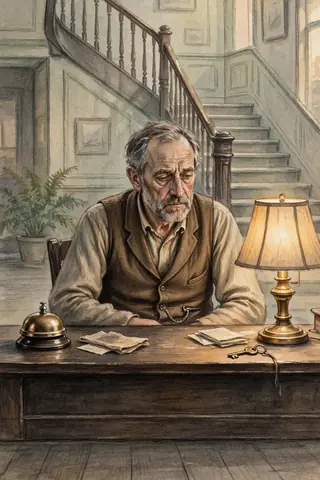
Quarto 13
Histórias do dia a dia · História 7 · Portuguese · 15 min
DuoText original - B1

A mensagem de amanhã
Histórias do dia a dia · História 9 · Portuguese with German · 15 min
DuoText original - B1
A mensagem de amanhã
Histórias do dia a dia · História 9 · Portuguese · 15 min
DuoText original - B1
A mensagem de amanhã
Histórias do dia a dia · História 9 · Portuguese with Japanese · 15 min
DuoText original - B1

Não para o Jonas
Histórias do dia a dia · História 10 · Portuguese · 20 min
DuoText original - B1

Paciência de Maré
Histórias do dia a dia · História 8 · Portuguese · 20 min
DuoText original - B1

Ainda não
Histórias do dia a dia · História 6 · Portuguese · 20 min
DuoText original
What intermediate Portuguese stories are like
These stories are written for B1 readers: longer than beginner stories, with dialogue, the past tenses and the everyday phrases that textbooks leave out, and a plot that carries you to the end.
The vocabulary is wider and the sentences longer than at A2. With the English next to each paragraph, none of that has to stop you.
How to read Portuguese at B1–B2
Read in Portuguese, check in English
At B1–B2 you can usually follow the Portuguese on its own. Keep your eyes on it and look across only when a sentence doesn’t land, rather than reading both sides line by line.
Let the plot pull you
These stories were written to be enjoyed. If you want to know how it ends, you will read faster and remember more, so pick the one whose first page grabs you.
Notice the tenses
Stories are told in the past, and the Portuguese past tenses carry meaning the English sometimes flattens. Comparing the two sides is the quickest way to feel the difference.
More on the method in how to read a parallel text.